Hi, I'm Chandan Rudrappa.
I take ML and LLM systems from notebook to production, and I measure every one of them against an honest baseline.
Edison, NJ · Open to relocation
About
I'm a Machine Learning and AI Engineer with 2.5+ years of experience across academic research and enterprise analytics, and an MS in Data Science from The University of Texas at Arlington (GPA 4.0).
My work spans fine-tuned transformer classifiers, RAG pipelines, multi-agent LLM systems on LangGraph, Claude API classification with prompt caching, and serverless inference on AWS. I ship ML code through Docker, Kubernetes, Jenkins, and Terraform.
I benchmark every system against a reproducible baseline instead of trusting prompt quality alone, and I report the result even when the simpler model wins.
Experience

Building LLM and NLP systems that automate qualitative policy analysis for Medicaid 1915(c) waiver research.
- Built an LLM classification pipeline on the Anthropic Claude API that tags waiver sections with confidence scores and evidence-backed rationales, piloted on 20 themes and cutting analyst coding time by 60%, with prompt caching on static theme definitions holding down API cost.
- Scaled that pilot to the full 57-theme codebook with a RAG system embedding 1,300+ human-coded MAXQDA segments in LanceDB, retrieving the nearest examples to ground and trace every prediction.
- Implemented a multi-label NLP classifier (TextCNN and fine-tuned BERT) benchmarked on micro/macro-F1 across the same 20 policy categories, establishing a reproducible offline baseline to validate the LLM approach.
- Automated section-by-section comparison of Medicaid 1915(c) waiver filings with a Streamlit tool that runs sentence- and word-level text diffs and exports HTML reports, saving the team 40+ hours of manual review every month and improving amendment-tracking accuracy.
- Stack: Python, Anthropic Claude API, LanceDB, PyTorch, Hugging Face Transformers, Streamlit

- Cleaned, transformed, and validated real-world community datasets across two centers, increasing usability for student projects and setting up rigorous baselines for statistical modeling.
- Mentored 100+ undergraduate students in Probability, Statistics, and Calculus I–III across two tutoring centers, guiding hypothesis testing and experimental setups and improving test performance by an average of 20%.
- Guided teams of 10–15 students on service-learning data projects with community partners.
- Coached students on research methodology, hypothesis testing, and statistical interpretation, helping translate community-driven questions into actionable insights.

Built the functions, case studies, recommendation logic, and visualizations behind LEAPS, a no-code analytics platform, and supported its enterprise clients.
- Designed and delivered 150+ reusable data science functions for the LEAPS analytics engine, migrating legacy R time-series libraries to Python and shipping releases through Docker, Kubernetes, and Jenkins CI/CD pipelines.
- Defined column-type-to-function recommendation logic for 1,400+ platform functions, powering a Neo4j-backed engine that surfaced context-aware suggestions (e.g., time-series functions for datetime columns).
- Developed 60+ end-to-end machine learning workflows and case-study notebooks spanning regression, classification, clustering, time-series analysis, A/B testing, and data preprocessing.
- Refactored 80+ static matplotlib visualizations into interactive Plotly dashboards, cutting front-end delivery cycles by 25%.
- Delivered 15+ end-to-end KPI case studies for an enterprise client, owning data sourcing, cleaning, and analysis, and building new data-transformation functions to close gaps found during the work.
- Benchmarked the platform's server-hosted Jupyter environment against Google Colab, documenting runtime differences to inform infrastructure decisions.
- Co-authored 5 instructional data science curricula, each with a no-code walkthrough and a Jupyter notebook.
- Led client open-house sessions for Siemens and Aditya Birla Group, presenting regression and machine learning analyses to groups of about 30 participants each.
- Started as a Python intern, building an internal employee portal with Flask and Django before moving to the Research and Analytics team.
- Stack: Python, R, SQL, Plotly, Jupyter, Docker, Kubernetes, Jenkins, Neo4j, AWS S3, Postman
Projects

Six Claude agents in LangGraph write fact-checked NFL opponent scouting reports.
- Orchestrates 6 Claude Haiku agents in LangGraph over 26 deterministic DuckDB stat tools: a planner, offense, defense, and injury analysts, and an editor.
- A fact-checker re-runs every cited tool call and sends failed claims back for revision, reaching 100% final claim accuracy across 120 reports (single-agent baseline: 99.5%).
- Evaluation harness plants wrong values, teams, and splits in drafts and catches 99.9–100% of them, with at most one false positive per configuration.
- Re-derived about 2,840 claims independently in Polars (100% tool agreement) and scored 360 reports against a frozen, hashed snapshot of games after the model's training cutoff.
- 3-way ablation over 40 games with 3 repeats, tracked in MLflow: the multi-agent design ranked first in 7 of 10 blind-graded games and scored +0.72 on a 1–5 scale (paired bootstrap 95% CI +0.33 to +1.10).
- Weekly live reports for all 32 teams at $0.03–0.05 per report using prompt caching and strict tool schemas.
- Stack: Python, LangGraph, Claude API, DuckDB, Polars, MLflow, Streamlit

Sorts consumer-finance complaints into six product categories, served on serverless AWS.
- Sorts complaint narratives into credit reporting, debt collection, mortgage, credit card, checking/savings, and student loans with fine-tuned DistilBERT.
- Built a balanced 8,100-example dataset with leakage controls (exact-duplicate and conflicting-label narratives removed before splitting); a TF-IDF + logistic regression baseline led DistilBERT on macro-F1 (0.893 vs 0.874).
- Asynchronous AWS pipeline: an API Lambda behind API Gateway queues requests on SQS, and a containerized inference Lambda writes predictions to DynamoDB, with a dead-letter queue and least-privilege IAM.
- All 28 resources provisioned in Terraform; validated end to end in a local AWS emulator and with pytest + moto contract tests before any cloud spend.
- INT8 ONNX quantization cut model size 75% (268 → 67 MB) and sped CPU inference 1.56× without observed macro-F1 degradation.
- At 3008 MB, inference reached 170 ms warm p95 and cut median duration 31% versus 2048 MB at roughly equal estimated cost.
- Stack: Python, PyTorch, Hugging Face, ONNX Runtime, Docker, Terraform, AWS (Lambda, SQS, API Gateway, DynamoDB, ECR, S3, CloudWatch)

Compares Medicaid waiver filings and tags their sections by policy category.
- Document checker: a Streamlit tool for section-by-section comparison of waiver filings, running sentence- and word-level text diffs and exporting HTML reports.
- Saves the research team 40+ hours of manual review every month and improves amendment-tracking accuracy.
- Tag classifier: a multi-label NLP classifier (TextCNN and fine-tuned BERT) that tags waiver sections across 20 policy categories.
- Benchmarked on micro/macro-F1, giving a reproducible offline baseline to validate the team's LLM classification pipeline.
- Stack: Python, Streamlit, PyTorch, Hugging Face Transformers
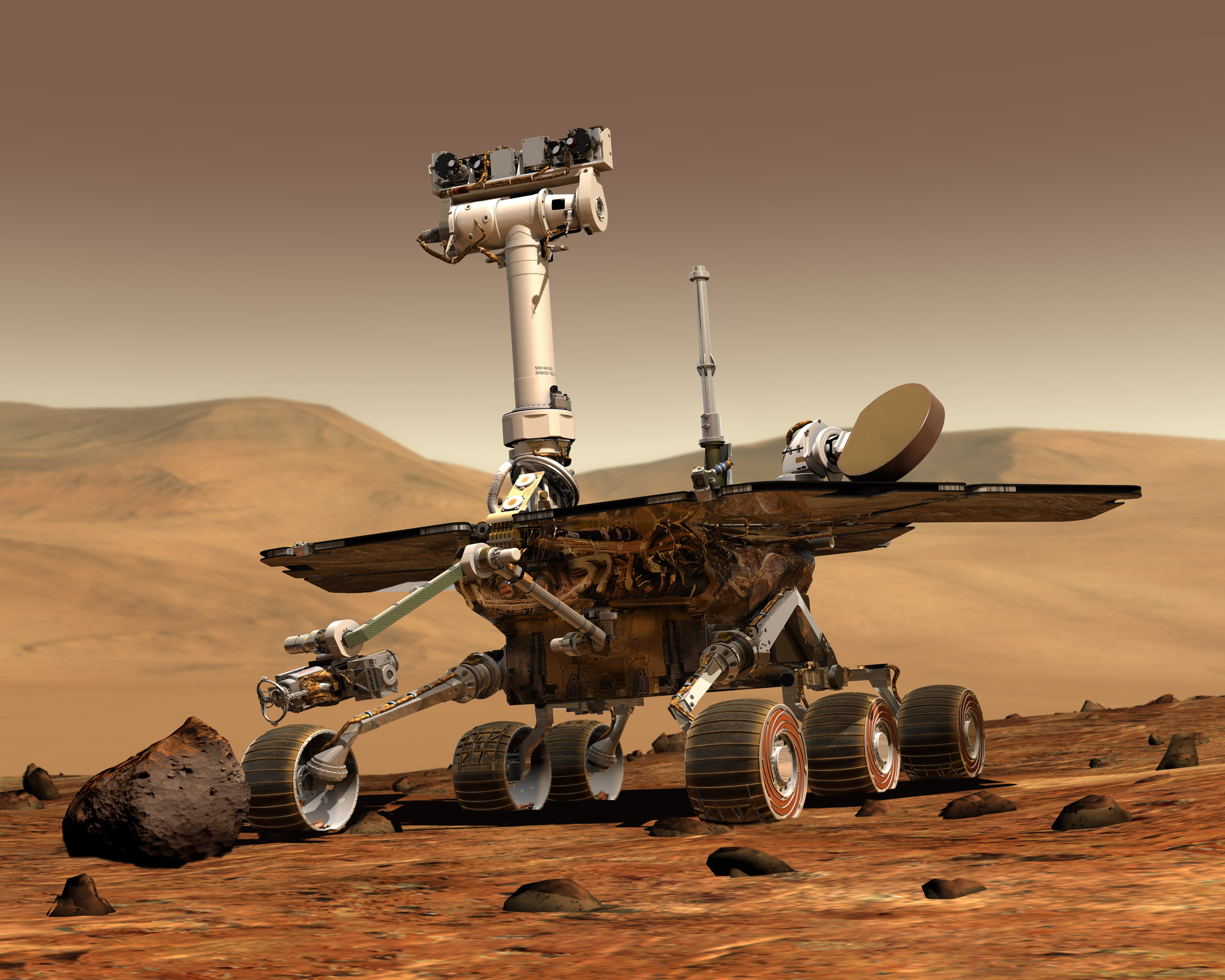
Perception and on-board inference for autonomous navigation on a ground-up Mars-rover build at UT Arlington.
- Developed ArUco marker and LiDAR-based object detection for autonomous navigation.
- Integrated the ZED stereo SDK on an NVIDIA Jetson TX2 and configured the vision workflow for on-board inference.
- Flashed and configured JetPack to enable hardware-accelerated inference on constrained edge hardware.
- Stack: Python, ZED SDK, LiDAR, NVIDIA Jetson TX2, JetPack

A geospatial analytics study of 300K+ UK STATS19 road accident records.
- Analyzed 300K+ UK road accident records to surface geospatial and environmental risk patterns.
- Built a Folium spatial danger metric flagging high-risk corridors as data-backed infrastructure-policy insights.
- Stack: Python, Pandas, Folium, Tableau

UT Arlington industry-sponsored capstone on tensile-strength optimization.
- Selected from 40+ competing teams to deliver a tensile-strength optimization study for an industrial client.
- Performed targeted EDA, feature engineering, and robust scaling.
- Built an ensemble classifier with strategic resampling to balance minority-class metrics and surface feature importance.
- Stack: Python, scikit-learn, ensemble methods, imbalanced classification
Skills
Generative AI & LLMs
- Anthropic Claude API
- LangGraph
- Multi-agent systems
- RAG
- LanceDB vector search
- Text embeddings
- Prompt caching
- LangChain
- LLM evaluation
- Claude Code
Machine Learning & NLP
- PyTorch
- Hugging Face Transformers
- BERT / DistilBERT
- TextCNN
- scikit-learn
- TensorFlow
- Keras
- Ablation studies
- Bootstrap confidence intervals
MLOps & Model Serving
- Docker
- Kubernetes
- Jenkins
- Terraform
- MLflow
- ONNX Runtime
- INT8 quantization
- pytest
- moto
- Git
Cloud
- AWS Lambda
- SQS
- API Gateway
- DynamoDB
- ECR
- S3
- CloudWatch
- Azure ML
Programming, Data & Visualization
- Python
- R
- SQL
- C / C++
- DuckDB
- Polars
- Pandas
- Neo4j
- Hadoop
- Plotly
- Streamlit
- Tableau
- Folium
- Jupyter
Edge & Robotics
- NVIDIA Jetson TX2
- JetPack
- ZED SDK
- LiDAR
- ArUco
Education
The University of Texas at Arlington
Arlington, TX
Degree: Master of Science in Data Science
GPA: 4.0/4.0
Relevant coursework:
- Neural Networks
- Computer Vision
- Big Data
- Probability & Statistics
- Data Mining
- Machine Learning
Ramaiah Institute of Technology
Bengaluru, India
Degree: Bachelor of Engineering in Electronics & Communication
CGPA: 8.31/10
Microsoft Certified: Machine Learning Operations Engineer Associate
Operationalizing Machine Learning and Generative AI Solutions (AI-300)
Contact
linkedin.com/in/chandanrudrappa
Edison, NJ · Open to relocation